Billy wallson
Senior DirectorMove past generic beach prints and explore unique vintage maritime wall art ideas that add depth and character.
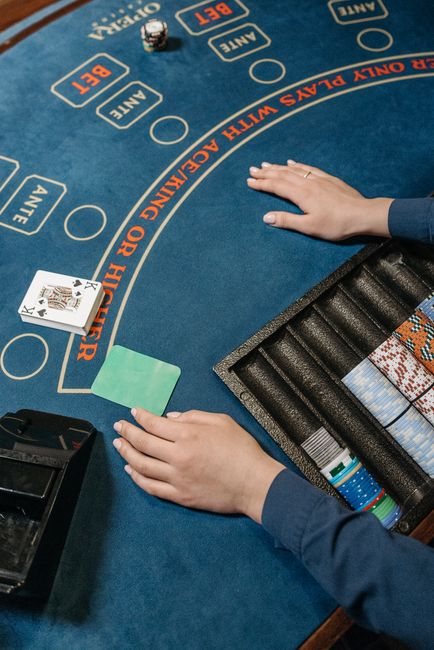
Nobody likes to hear it, but the machine does not care about you. It does not know you drove forty minutes to get there, that you're on a hot streak, or that you promised yourself you'd quit after one more spin. A slot machine is a random number generator wrapped in flashing lights, and once you understand what's actually happening inside that box, you can stop blaming bad luck and start making sharper decisions. This isn't a lecture about gambling being bad. It's a breakdown of how the games really work, so you can play with clear eyes instead of wishful thinking.
Every casino game carries a mathematical advantage for the house, and it is remarkably consistent over time. On a standard American roulette wheel with two zeros, that edge is 5.26 percent. European roulette with a single zero cuts it to 2.7 percent. Blackjack played with basic strategy can drop the house edge below 1 percent. These numbers matter because they compound. A player betting $100 a hand at a 5 percent edge loses an average of $5 per hand in expected value, and over hundreds of hands, that expectation becomes reality.
Slots are where people get fleeced without noticing. Modern video slots typically carry edges between 2 and 10 percent, but the variance is enormous, meaning you can win big on any given session and still be playing a losing game long term. The trick is that the wins feel meaningful while the losses feel like bad luck. They are not bad luck. They are the design.
You will see slots advertised with a return to player of 96 percent or 97 percent, which sounds generous. It isn't, in the way most people read it. RTP is calculated over millions of spins, not your session. A 96 percent RTP means that for every $100 wagered across all players over time, $96 comes back as wins and $4 stays with the casino. Your personal result in a two-hour session can be wildly different from that average.
Volatility is the other half of the equation, and it is arguably more important for how a session feels:
A slot with 96 percent RTP and high volatility can feel like a scam during a cold streak, while a 94 percent RTP game with low volatility might feel friendlier. Understand which one you're playing before you commit real money.
Poker is the one major casino game where a skilled player can genuinely beat the house, because you're not playing against the casino, you're playing against other people, and the casino takes a cut. That cut, the rake, is the only house edge in the game. The rest is you versus the table. This is why professional poker exists and professional slots does not.
But variance in poker is brutal, especially in tournaments. A player who gets all their chips in with aces against kings wins roughly 80 percent of the time, which means one in five times, they lose everything. Over a single tournament, that 20 percent can end your day. Over a thousand tournaments, skill dominates. The lesson for casual players is to avoid overreacting to short-term results. Losing with the best hand is not a sign the game is rigged. It is the math doing exactly what it's supposed to do. If this is new to you, slot deposit dana is a sensible next read.
Sports betting is different from casino games because the lines are set by humans and algorithms trying to predict outcomes, and those predictions are sometimes wrong. Sharp bettors make money by finding inefficiencies, not by picking winners on gut feeling. The closing line, the odds right before an event starts, reflects the market's best estimate. If you consistently beat the closing line, you are likely a long-term winner. If you don't, you're probably not.
A practical tip: track every bet you place for three months, including the odds, the stake, and the result. Most recreational bettors discover they are losing more than they thought, usually because of parlays and live betting, where the house edge is highest. Straight bets on moneylines and spreads with low vig are where disciplined bettors operate.
Walk into any casino and you can spot the difference within ten minutes. It's not about how much money someone has. It's about behavior. Here is what consistently separates players who last from players who get cleaned out:
None of this is glamorous. There is no secret system, no hot number, no slot that is due to pay out. Anyone selling you that is selling you a story, not a strategy.
The iGaming world is built to be entertaining, and it is genuinely good at that. But the math does not negotiate. Every game has a cost, and the only real control you have is how much you're willing to pay for the experience. Understand RTP, respect variance, track your bets, and never play with money that matters. Do that, and you can enjoy slots, poker, and betting without becoming a cautionary tale. Ignore it, and the house will happily keep teaching the same lesson until you stop showing up.
From table lamps shaped like beacons to framed prints of famous lights, lighthouse decor offers endless ways to brighten a nautical home.

From ship's lanterns to lighthouse lamps, discover how vintage maritime lighting can transform your home's atmosphere.
Old nautical charts offer beauty, history, and a window into how sailors once understood the sea.

Natural materials bring texture and warmth to nautical interiors, and they are easier to work with than you might think.

Move past generic beach prints and explore unique vintage maritime wall art ideas that add depth and character.

From table lamps shaped like beacons to framed prints of famous lights, lighthouse decor offers endless ways to brighten a nautical home.

Copyright © 2026 The Brass Bell. All Rights Reserved.




Roseanne Williams
Oct 4, 2026 ReplyDiscover why the ship's bell remains one of the most beloved and versatile pieces of maritime decor for the modern home.